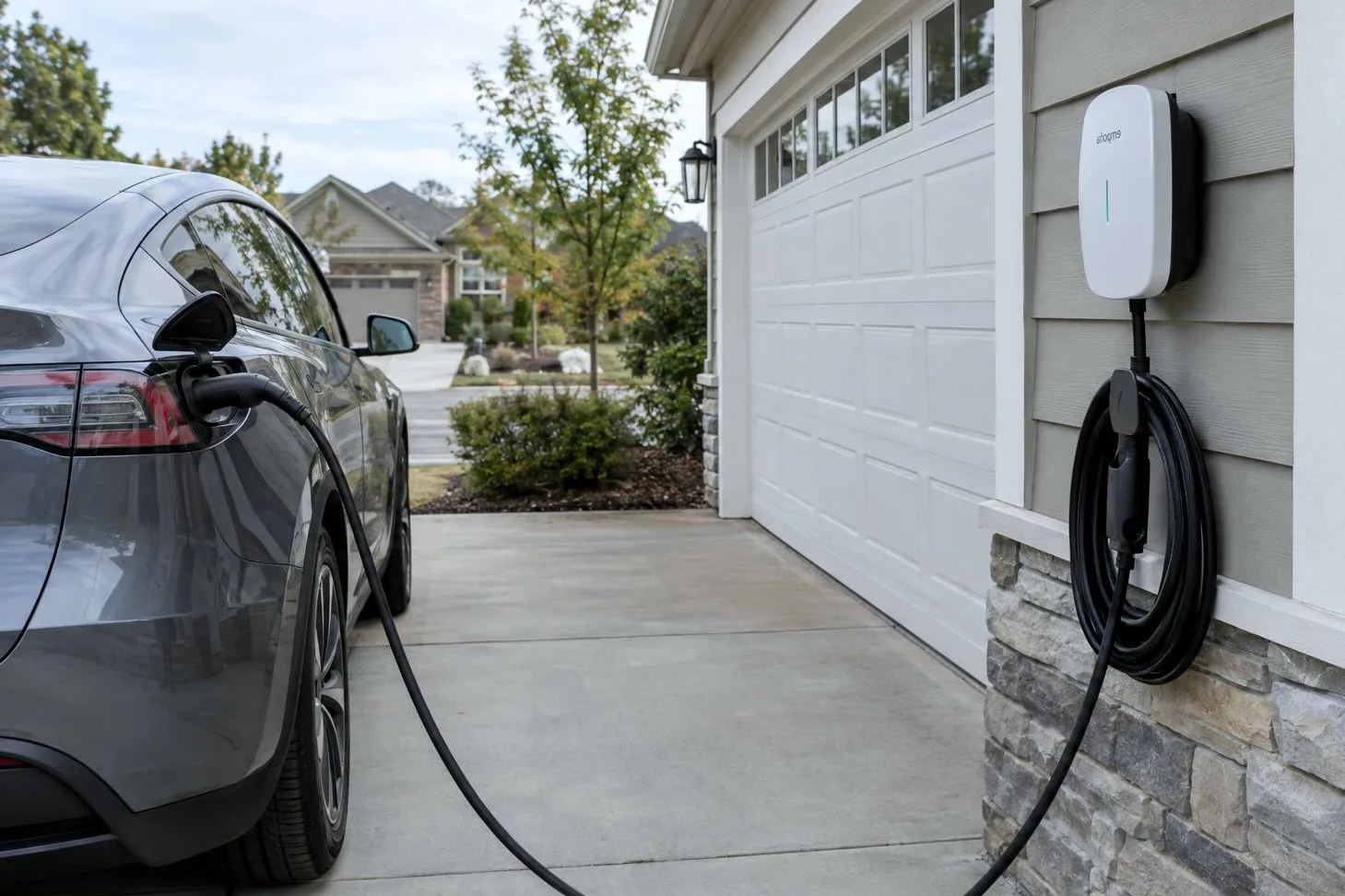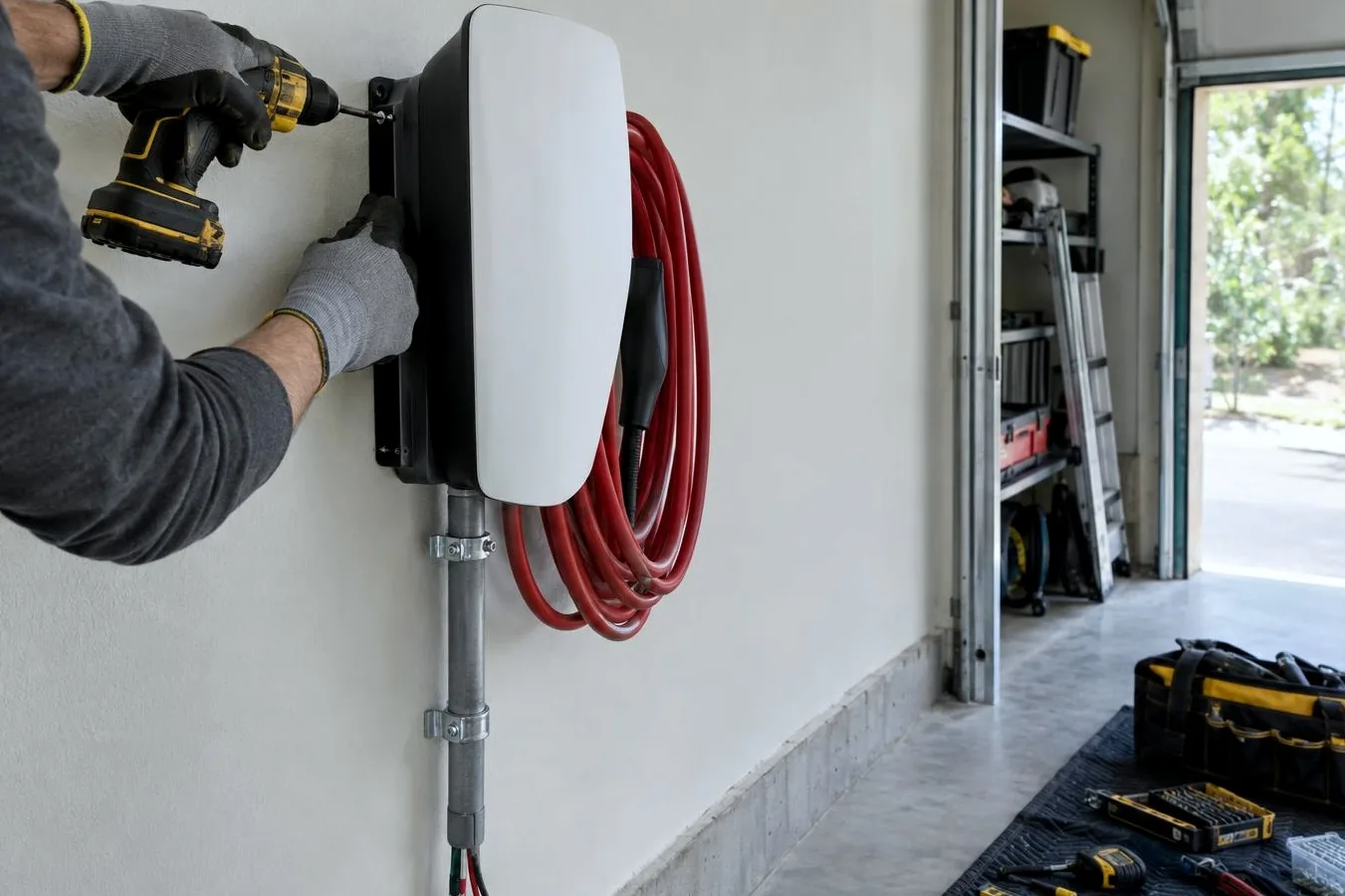
The Tesla Wall Connector pulls its full 48 amps through a 60-amp breaker, and that breaker serves nothing else in your home. You get a mount where your charge port lands, Wi-Fi pairing for scheduled charging in the Tesla app, and automatic firmware updates. Indoor and outdoor mounts both work.
Plenty of Cary families own a Tesla alongside an EV from another brand, such as a Hyundai Ioniq 6 or a Ford Mustang Mach-E. In that garage the Universal Wall Connector handles both cars, since it pairs the native Tesla connector with an integrated J1772 adapter. A household with two Teslas can instead split one circuit through power sharing. A Wall Connector can also be set to a lower amperage when your panel is tight, and it still refills a typical Cary commute overnight.
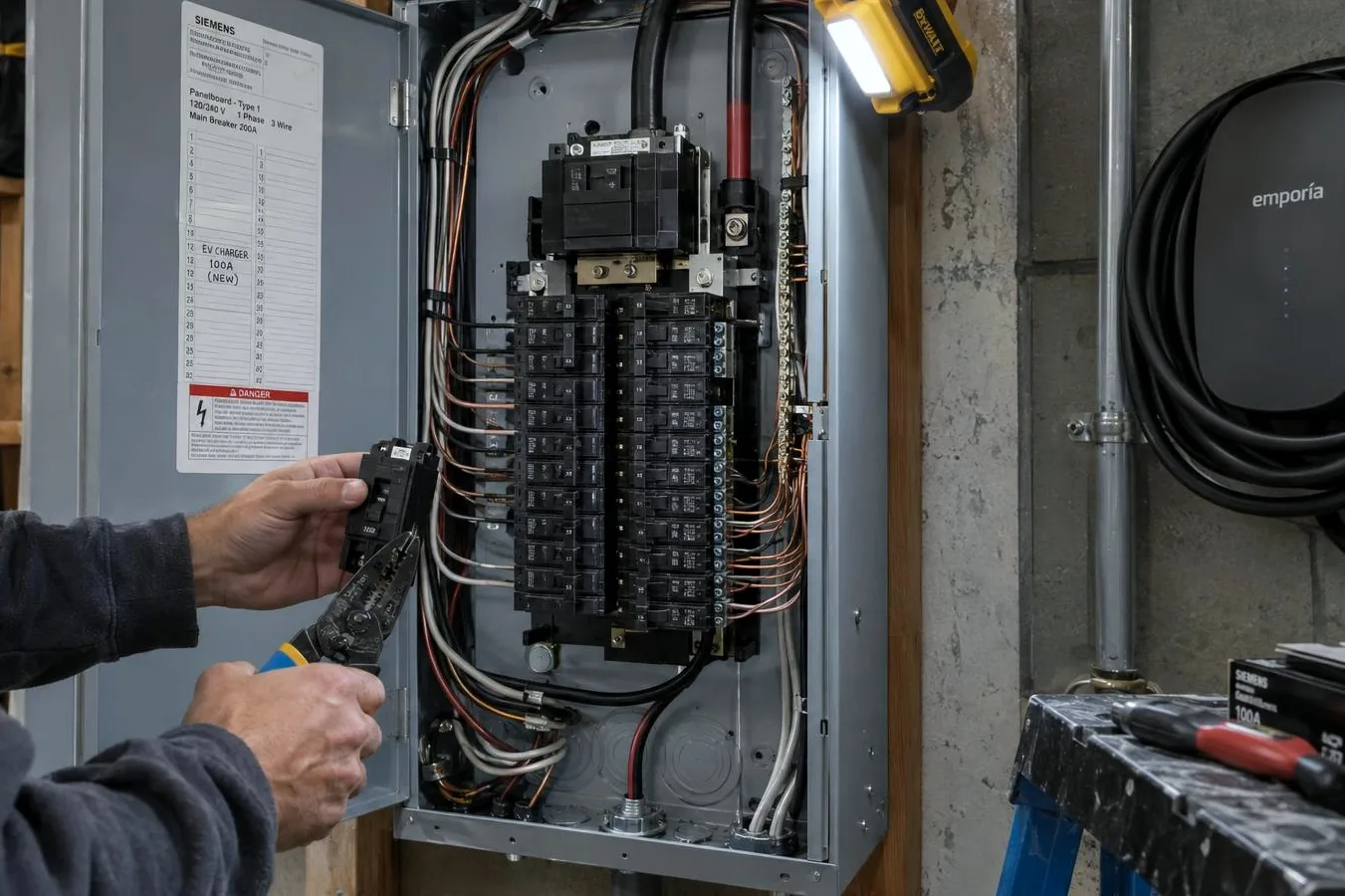
Cary's median home dates from 1999, and a quarter of the town's houses went up in the 1990s. Homes of that age usually came with 200-amp panels, which leaves room for a 60-amp charger circuit in most cases. A load calculation at your estimate confirms it.
When your panel is full or the numbers come up tight, you still have options short of new service. Load management or a subpanel can each work, and a 200 amp service upgrade is priced beside them as the last resort. You see all three on one page, so the choice stays yours. Duke Energy customers can put the Charger Prep Credit toward any of them.
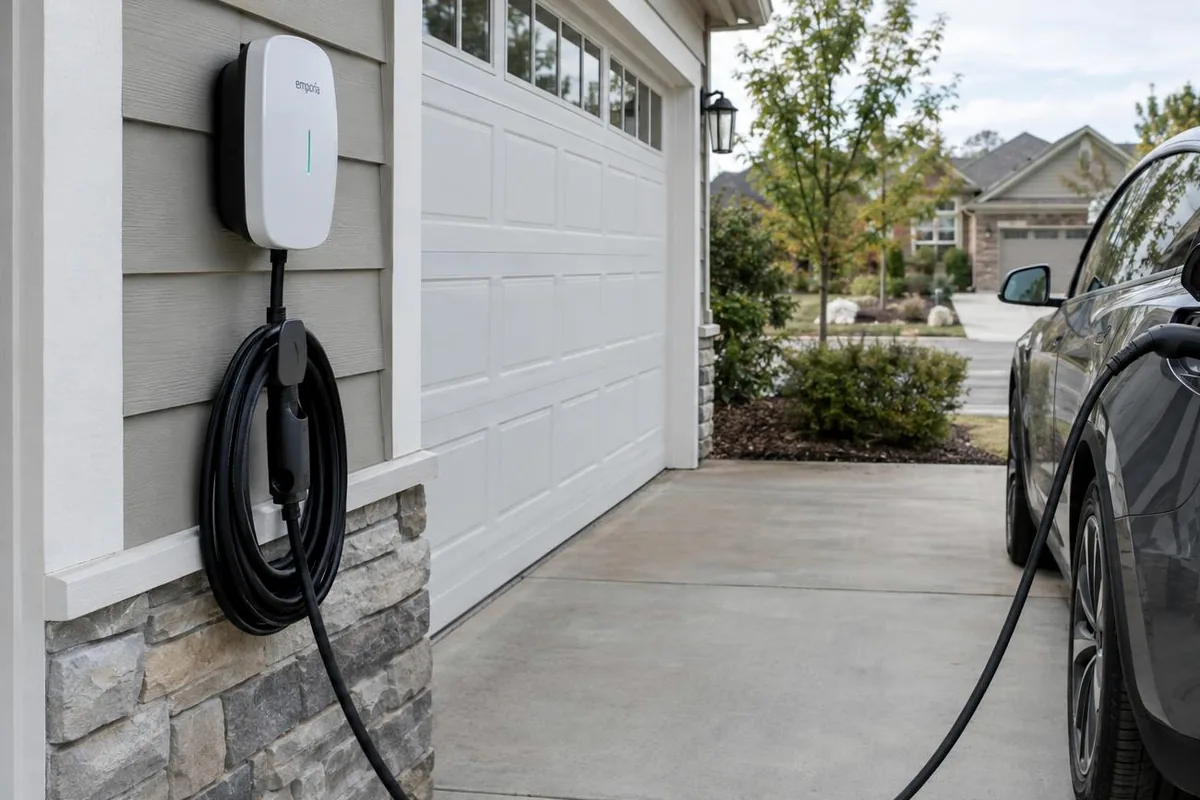
Level 2 Charger Installation for Non-Tesla EVs
A Level 2 charger restores 10 to 30 miles of range in each hour on the plug, while a standard outlet gives back 2 to 5. Your Cary to RTP round trip is about 23 miles, which takes 4.5 hours or more on a wall outlet. On Level 2 the same trip comes back in under an hour to about 2.5 hours.
We install Emporia, ChargePoint, Wallbox, JuiceBox, Ford and Rivian units, hardwired or plugged in, indoors or out. Smart models let you schedule charging overnight from your phone. Tell us your car before you buy, and we will size the charger to its onboard charger and to your panel.
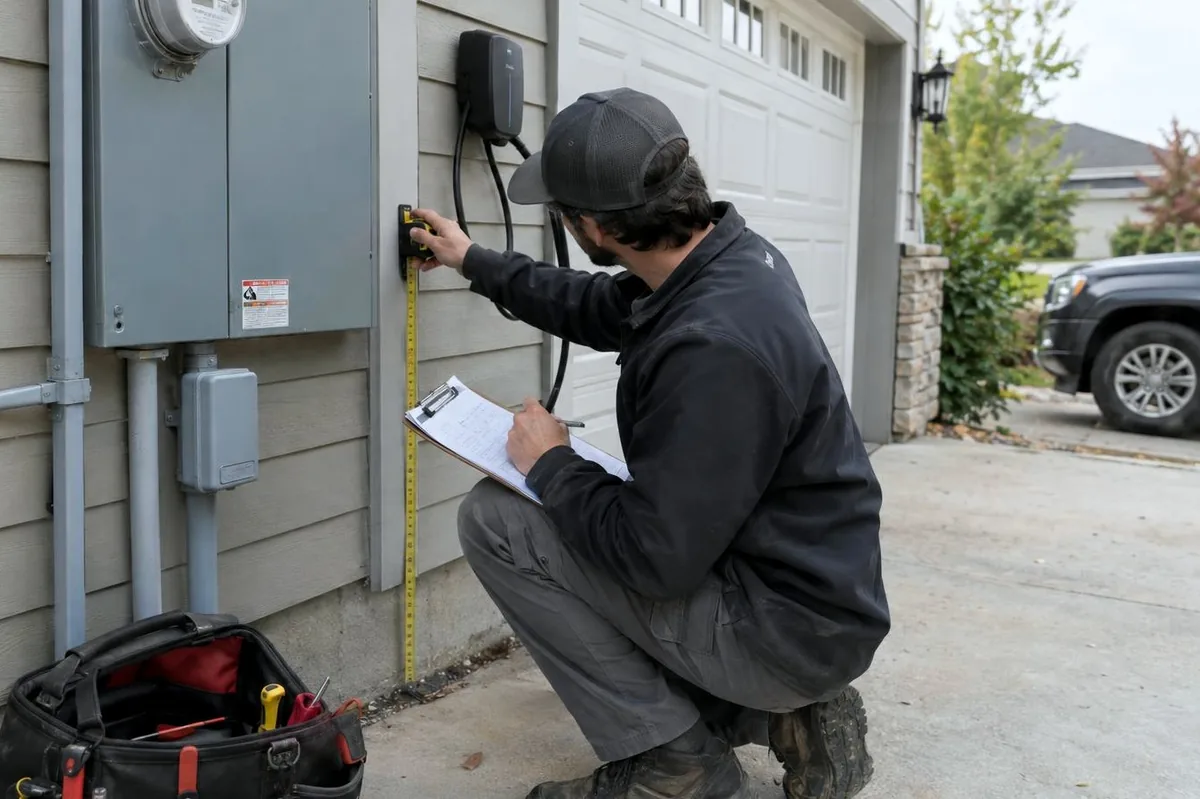
NEMA 14-50 Outlet Wiring for Plug-In Chargers
If you would rather plug in, a NEMA 14-50 outlet on its own breaker lets you use your car's mobile connector or a portable charger. Your receptacle sits within reach of the parking spot, with no extension cord in the way. A plug-in setup also suits owners who expect to move, since the portable charger leaves with you.
Plug-in setups have a ceiling, because Duke Energy says anything above 40 amps must be hardwired. A dryer outlet shared with an appliance is never a substitute, so every receptacle we fit gets its own circuit and a breaker sized to the outlet.
Two EV Charging on One Panel
Two commuters sharing one wall outlet cannot both refill overnight, so a second charger is often what makes a two-EV household work. Two chargers do not always need two new circuits, though, and your load calculation shows which route fits the panel you have.
With Tesla power sharing, two or more Gen 3 Wall Connectors divide a single circuit and stay within its limit, up to six units in all. A mixed garage can run on load management, or on a second breaker when your panel has room for it. Either way, both cars start each morning with a full battery on a normal Cary commute.
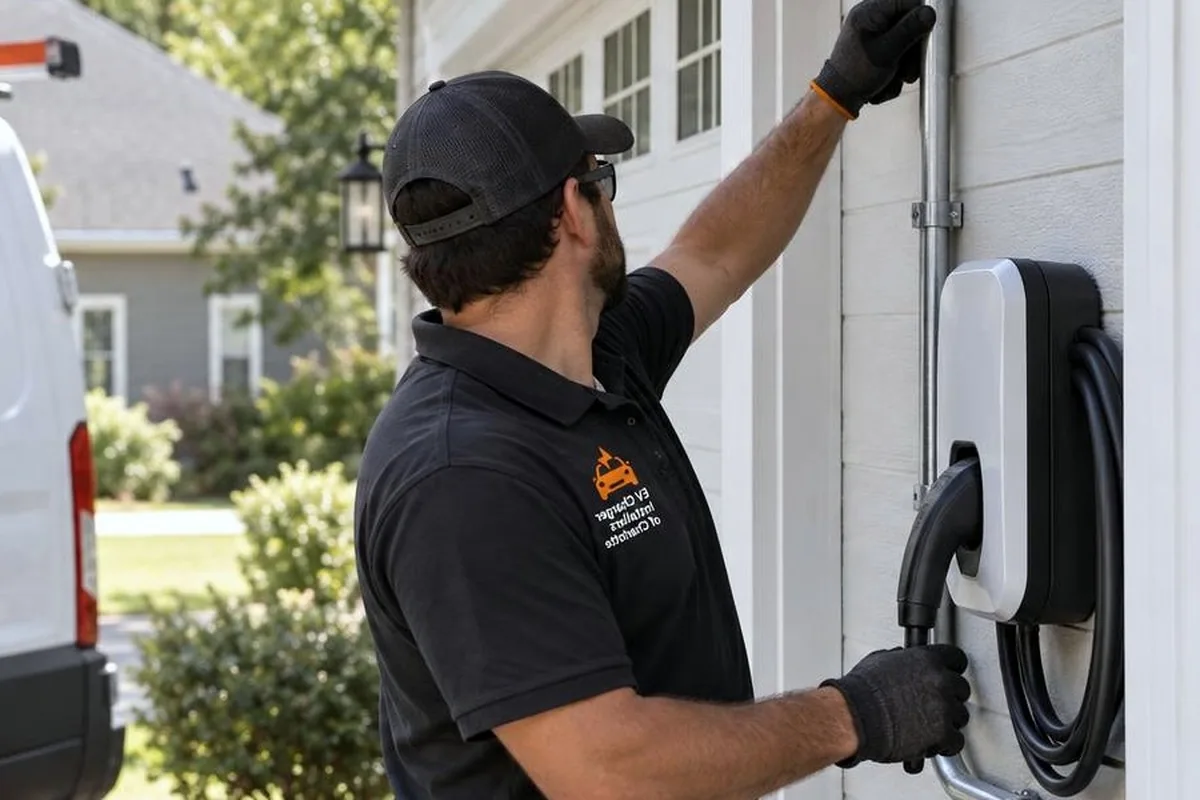
Townhome and Garage Charger Installs
Townhome owners qualify for the Duke credit just like single-family owners, as long as they own the unit. We plan the run around shared walls and check where your HOA allows an exterior mount. When the panel sits in a utility closet far from the parking spot, we map the route before quoting so the price holds.
In a detached home the charger can go inside the garage, on a carport post or on an outside wall, as long as it connects to your home's own panel. Outdoor installs get a weather-rated unit and conduit the whole way.